
Unveiling the Advantages of the SCU6x Controller & the ODC Family
Transcript
Show full transcript (296 words)
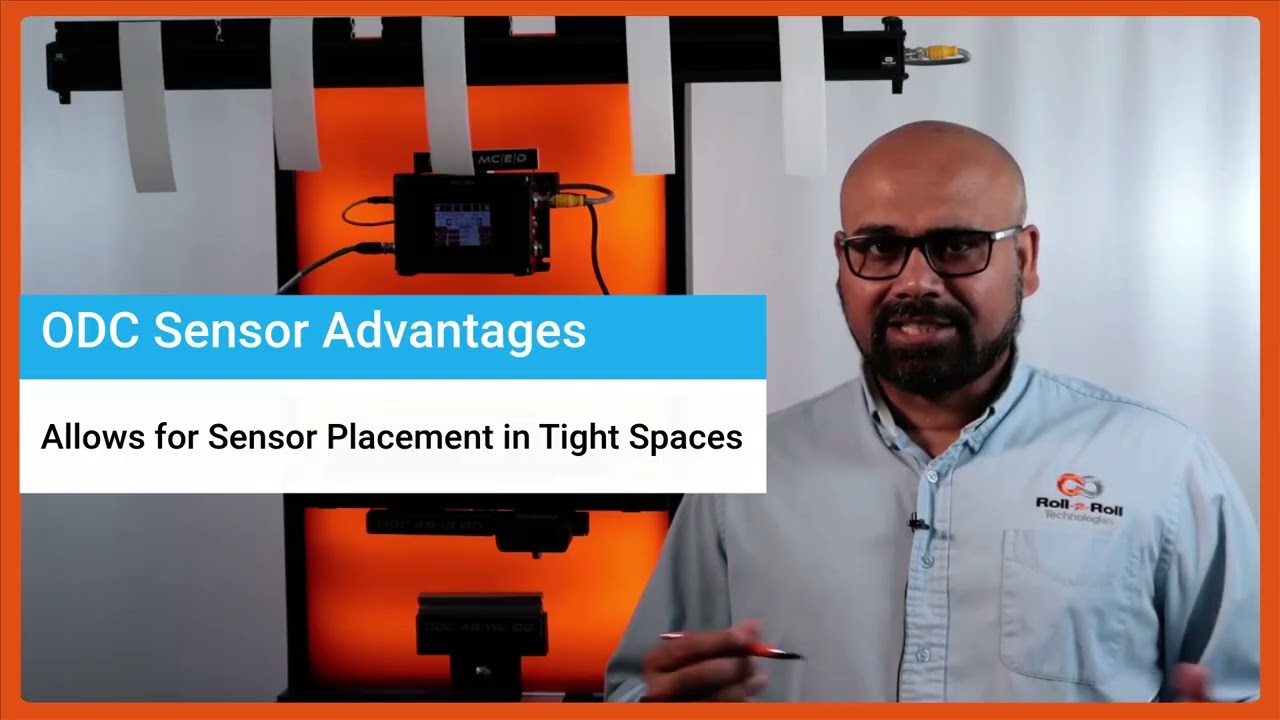
One of the key things with our SC6X controller and the ODC sensors is that [music] they not only are used for guiding purposes, they're also used for any type of cross machine direction width measurement applications. It could be measuring the width of a single web or multiple webs. Here again to reiterate on some of the advantages of the ODC sensor is that it's a one-sided sensor technology. So it allows us to install the sensor in tight installation spaces whereas a camerabased traditional machine v machine system might need a long longer field of view and working distance which creates issues if you want to add an width measurement system to an existing machine.
The other advantage is that the light source, the optics and the camera, everything is built into a single interface like what we have here. We don't have to have a separate light source or gantry [music] to have the camera and the light source built in. The third advantage is that the sensor provides a one one magnification. If the object is 100 mm wide, we're using a sensor that is at least 100 mm wide.
So, we get a one one magnification. The advantage is that when you go to a wider width, you don't lose any resolution. So for example, this ODC 960 which is a measuring range of 960 mm can provide the resolution of 127 micron on the camera level and then sub pixel with that you could get up to about 33 micron resolution. your resolution is not affected by the field of view that you are requiring.
Because of these advantages, the ODC sensor is used for a lot of different applications, especially in existing slitter rewinders where you want to measure the width of the material.
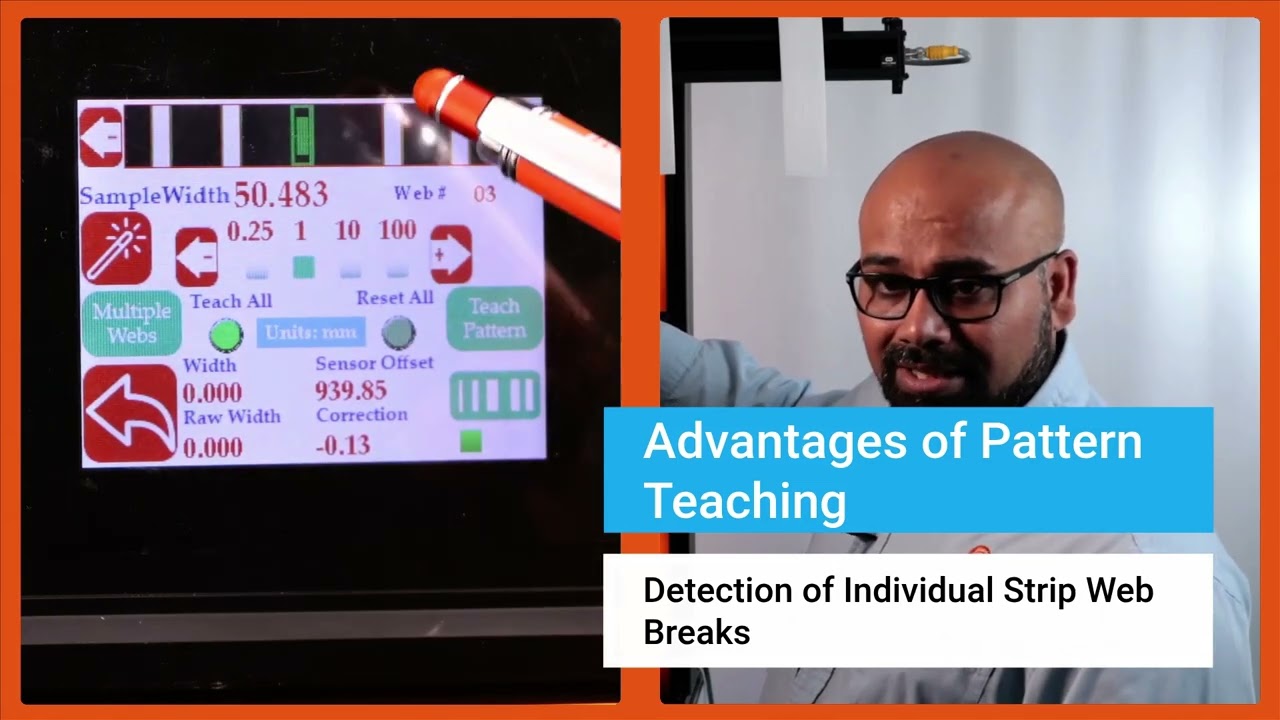
In this episode of the Multiple Web Width Measurement Application Series, we showcase the advanced pattern teaching feature of the SCU6x controller. Learn how to set up widths, samples, and jobs to monitor changes in material movement and width accurately. Discover the advantages of the pattern teaching mode, such as alerting when a web breaks and maintaining precise measurements even with intervening materials.
Transcript
Show full transcript (485 words)
Now we do have another feature that allows you to get even higher um uh uh insight into your process and what that is what we call pattern teaching. So essentially what we will do with the pattern teaching is that we set the widths, we set the samples, we set the job. We're looking for not only the change in the width but also change in the movement of the material. You can enable that by pressing this button that's in the pattern teaching mode.
When you're ready to teach the pattern, we're going to press this teach pattern and press accept. So now the system is taught the pattern. What is the advantage of that? If I have uh let's say I'm in web 3, right?
And if the web three breaks right now, it is actually showing you that hey, I'm supposed to see a web there. It's broken. The value is zero. And it's going to provide an alarm or alert right there.
That's one advantage of that. Another advantage with that is that let's say I have a web five that I'm tracking right here and if I have another material that comes in between there, the web five's measurement is not affected by that whatsoever. In a typical camerabased system, they're going to keep track of the width randomly based on which one is first and which one is second. That would affect the measurement.
If I do have this pattern off, web five will actually jump. You saw that it jumped to that 10 mm and it jumps back. To avoid this jump, we are going to use the pattern. And once the job is set up in your slitter rewinder, it's not going to change.
The pattern is not going to change. Then even if something comes in, that gets completely disregarded. That's the advantage with the pattern teaching or pattern matching mode. Those are the key things with regard to how you can set up our SCS 6x controller for multiple slit width measurement.
Okay, one of the thing that we wanted to show is that this width measurement right now we are in pattern mode. So even in pattern mode, if the web moves back and forth, you can see that the web is moving, but it's also keeping track of that edge position, keeping track of that width pretty accurately. And we can actually move this quite a ways off and that's when it will say that the pattern is supposed to be there, but it has moved from its intended position. So this is an example where let's say the slitter blade moves too much then you can catch that.
Obviously it'll show up in the width but it'll also show up in the web position. As soon as we come back into that location, the actual location itself, then it locks in on that

Setting Nominal Width, Upper and Lower Limits for Multiple Web Width Measurement
Transcript
Show full transcript (798 words)
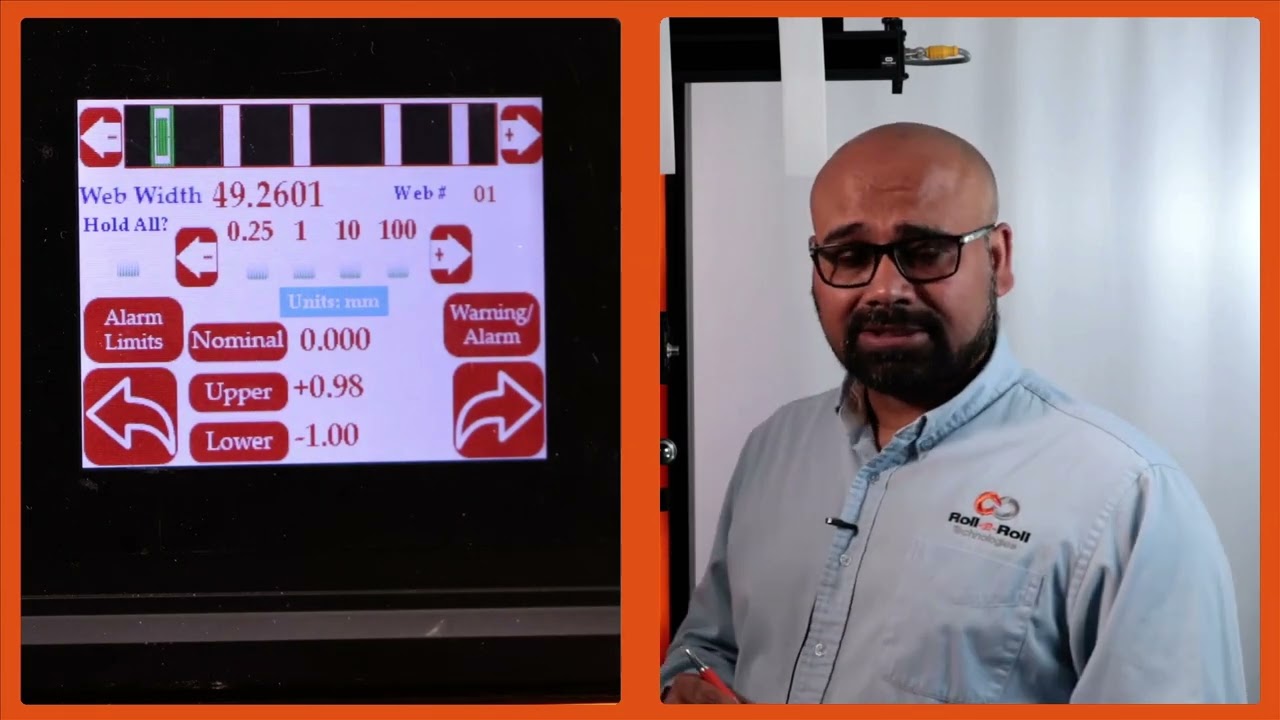
Then like I mentioned for each web we can set an nominal width, upper limit and lower limit. Right now I'm going to show you how we can set those things. So in order to set the nominal width we're going to press that nominal width icon and then we're going to choose how much increment we want to make. So I'm going to do 10 mm increments here.
So I'm going to change that to 50 mm. Okay. So the nominal width is 49.24. That's it.
There's no need to save anything here. Anytime you change that, that parameter is automatically saved and saved into the memory. So when you power cycle it, it comes back in. Likewise, you can set the upper limit and the lower limit.
So you choose the parameter that you want to change and pick the increment. If I do 1 mm increment that's going to be like that and you can do it like that. It's very simple intuitive way to change it. And likewise you can change those things too.
Now there are applications where we would have two types of outputs. One is to say that if my width is above a certain upper limit or if the width is below a certain lower limit you want to trigger an output there. So in those cases we would have something what we call as that upper limit lower limit kind of thing. So this is a pretty simple setting.
All that we are looking for is hey if the width goes above my upper limit trigger an output or if the width goes below the lower limit trigger another output. So just two boundaries and then within the nominal range the output is not triggered all good signals are provided. If you want an additional layer where you want to set alarm limits and warning limits then we can do that too. So in this particular case then you need to make sure that it is in alarm and warning.
When you have this in alarm and warning you have this button show up just to show you one one more time. If I have it just on upper and lower limit these are the two parameters we can enter. But if we are in warning and alarm there are four parameters you can enter. The first two parameters are here and the second two parameters are warning limits.
warning signal so that you don't have to stop the machine when the warning signal is there. This is just for the operators to know something is getting to get bad and once it hits the alarm limits then you can stop the machine if you wanted to. Just like I mentioned the warning limits are going to be closer to your nominal width and the alarms are typically farther away from there. So in this case we have it set as plus or minus.5 mm and then this is plus or minus.1 mm for that and you can do that for every single web.
You can set the upper limit, lower limit, alarm and warning limits. Right now for web two it's not set up. Web three you can see what is set up there. None of these are set up there.
But that's the way for us to set this up for the alarm and warning so that when the width changes you have the ability to provide a digital output to a stack light or something like that. So that is essentially how to set the multiple width measurement these warnings and alarms. And again just to go through this one more time I'm going to pick width two. I'm going to set that nominal width to be 49 point let's say.5 there.
So I am in warning and alarm. So I'm setting the alarm limits for this. So I'm going to set this as 1 mm and the lower one as 1 mm as well. And alarm I'm going to set this as 0.5 and 0 five for that.
And then you can keep doing that for multiple webs. And if you go back here, you can see for the different values, different webs, you see different values there. When I go from one to another, you got all of these set there. All of these are saved in the memory.
Then you have that option to do it. This is where you use the controller. An operator is manually setting this. All of this can be automated through Ethernet and you can send a recipe to our controller to say web one should be this width.
The upper limit is this and the lower limit is this. Upper warning limit is this and lower warning limit is this and so on and so forth.
Accessing the operator width measurement and monitoring screen from the home screen is a simple task to perform. In this brief video, we guide you through the steps necessary to set your SCU6x Controller for web width measurement and monitoring. Start by pressing the tools icon, followed by the operator icon located at the top right, and then the width icon. You'll first arrive at the operator width home screen, and there's an additional setup screen available where you can perform further setup tasks.
00:00 Accessing the Operator Width Screen
Transcript
Show full transcript (57 words)
To get to the operator width screen from the home screen, we're going to press the tools icon, then the operator icon on the top right and then the width icon. This first page is the operator width home screen. The second page is an additional setup screen where you're able to do more setup related things.
How to Access the Operator Width Screen
In this video, we guide you through the steps to access the operator width screen from the home screen. Start by pressing the tools icon, followed by the operator icon located at the top right, and then the width icon. You'll first arrive at the operator width home screen, and there's an additional setup screen available where you can perform further setup tasks.
00:00 Accessing the Operator Width Screen
00:17 Operator Width Home Screen Overview
00:21 Additional Setup Screen
Transcript
Show full transcript (57 words)
To get to the operator width screen from the home screen, we're going to press the tools icon, then the operator icon on the top right and then the width icon. This first page is the operator width home screen. The second page is an additional setup screen where you're able to do more setup related things.
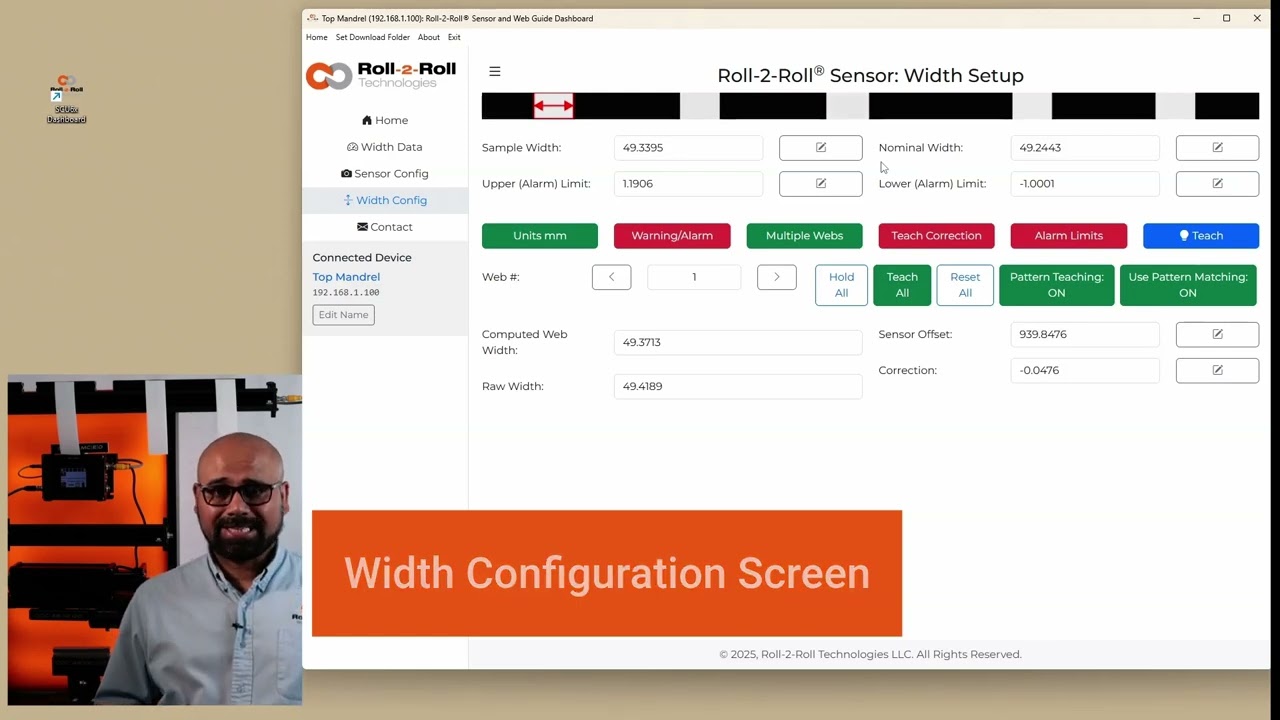
Multiple Web Width Measurement is made simple by the SCU6x Controller and the application that is accessible through Ethernet communication for a continuous multiple web width measurement. This application allows converters with processes such as slitter rewinders to eliminate down time due to width verification of the multiple webs. This unique feature of the Roll-2-Roll Technologies SCu6x Controller allows for monitoring and data collection of up to 32 web widths simultaneously and constantly.
Transcript
Show full transcript (4476 words)
[Music] Hello everyone. This is Arvin Seadri from Rollto-roll Technologies. In the last video, we looked at how to set up the SCU6X controller for multiple webwidth measurement with a single sensor. We're going to continue on that video.
In case you haven't watched that video, go take a look at that and then this will be a continuation of that. In case you haven't subscribed to our channel, please subscribe and follow us and turn on the notification bell. Today we're going to look at how to get the data from our SCU6X controller and specifically the multiple slit width measurement application. In a previous video, we looked at how to set up that application with the SEO 6X controller.
In this video, we're going to look at how to do that from the app we have through the Ethernet interface. Just to recap, we have a sensor here that is ODC960 and we got like five different webs there. So, we're going to track the width of each lane that we have there. And like I mentioned in the previous video, we looked at how to measure and set some of the parameters from the SEO6X controller.
And in this video, we're going to look at how to do the same thing with our app. So if you have the applications where you want to measure the multiple slit width, we would have provided you with an application and you can open that application and get started. So I'm going to start with that. You can doubleclick on the icon and that will open up this interface.
Because we don't have any controller set up the first time, we do have to set that controller for the first time. this dialogue would open and you need to know the IP address of the controller. We have additional videos in our library that shows how to find the IP address of the controller in in case you don't know that. Also, we need to be in the same network where the controller is set up and where the computer is set up.
So, we we have that condition here. So, I'm going to type in the IP address of the device, which is 192.168.1.100. And then that will open up a dashboard. And I'm going to bring it to my screen here.
So, you can see that. So, this is the dashboard that opens up. Few things with with this dashboard. You can see that it's currently showing what sensor we have connected.
Sensor one is ODC 960 with 7,590 pixels. And then it also gives us some information on the thread count. I mean, it's thread count or web count. It's pretty much the same thing.
And it has a dashboard that shows a few different things here. Because we're looking at the width measurement application, we're actually not going to be on this screen. We're going to be on a different screen. to look at all the different options that we have.
You can go into that screen and pretty much pick the menu that you want to choose. Few other things you can label this controller. So you can say it is top mandrel or job A or whatever that is that you want to set it up. Usually in a slitter rewinder you have two rewinds and after slitting it's split into a duplex and then you can have the top and the bottom.
So you can name that like that. The other thing that you can do is you can set the default download folder location top mandrel and then you can select that folder. So anytime we collect the data and we download the data from this app that's going to go into that folder. If you have another controller and another IP address, you can have an independent folder for that also and set that up so that each each one of those controllers have a different place to download that data.
This screen that you see here is going to be exactly the same thing that you're going to see on the SC6X controller. You have the brightness, you have the contrast, and all of those things. If I change any of these parameters, you can see that it's also changing in the SC6X controller. So the brightness is set to five here.
If I change this brightness, that's going to show up on this one, too. So now the brightness is 22. Essentially, it's just a mirror of what we have there. Everything we did with the SCU6X controller can be done through this app in terms of setting the brightness, contrast, or width specification.
I'm going to go to the width config. This is where we spent a lot of time in the previous video on how to set up the samples. Compared to the other screen on the SCSX, this is just one screen. You got everything you need on this screen.
So again, to go through the widths, you can press this icon here, the arrow keys, and it's telling you what web width we have. So width five, and it's allowing us to scroll through there. The computer width is the actual measurement. When I go to the next one, you see different measurements for each of those.
And the raw width is what the sensor is measuring. Then you add that correction and you get the computer width. So that one is also available here on this. So each everyone every single width.
You can see that the correction is changing like we taugh in the previous video. And then each of them has their own sample width. We looked at in the video how to change it in the SC6X controller. In this case, if you want to change it, it's simpler.
You just type in the exact number for that. So I can say 49.35 and it will enter that number. It will enter the value closest to the pixel value in our sensor. It won't be exactly 49.35.
In this case it was 49.3395. Based on the resolution for most cases it should be good enough. If you want to change the upper limit you can do that too. So I can say 1.2 and save.
then it's going to go to the nearest value which is 1.1906. So you can do that for all of these parameters. And we also looked at alarm and warning limits. The same icon when you have warning and alarm you got four parameters that you can enter.
You can say for the warning what are the upper limit and the lower limit and for the alarm what are the upper limit and lower limit. Usually the warning limits are going to be closer to your nominal width and then the alarm ones are going to be farther away from the nominal width. So if you press this icon, you can change between either you want to do alarm or warning or you want to go to a simpler version of upper limit and lower limit just like what we had in the SEU 6X video. And then if you want to set the warning limits, you go on to this icon and press that.
And now it shows you the warning limits there. The warning limits are smaller than the alarm limits. And that's what we are seeing here. It makes it easy for us to switch between that and enter those values.
This one is the units. So you can switch between millimeters or inches right here. For all of these you can again enter those nominal widths and upper limit and lower limit just like we had in the other video. So in order to set up the app for multiple split width measurement application you can go into this width configuration screen.
As you see the width configuration screen is pretty similar. On the top you have the realtime preview of what the sensor is seeing and it's the same as what you have here except that you have all the parameters that you can set for your width measurement application. You got the live preview showing the five webs I have installed up there. You can use this arrow key to navigate from one web to another web and that way you can see the actual measurement for each web in real time.
There are two main things that an operator can do with this particular page. One is to set the nominal width, upper limit, lower limit, alarm, warnings and all those kind of things. So that you can set this up to constantly monitor the multiple widths and provide a feedback whenever something is unusual or outside your tolerance limit. that can be done by setting the nominal width, upper alarm limit, lower alarm limit and warning limits or those kind of things.
If you have watched some of our previous video, you know what I'm talking about in terms of alarm, warning, upper limit and lower limit. There are two types of setups that you can have. One is a simple setup. You have a nominal width, an upper limit, and a lower limit.
As long as the web is between those you get an all good signal. If the web width is more than the upper limit then it will trigger a particular digital output and then if it is below a lower limit it'll create a particular digital output. To set that up you need to be in upper limit lower limit mode and then you can set your values for that. So you can just enter the value.
I can say 1.25 25 for the upper limit 1.25 and then that provides that value. The value is exactly not 1.25 just because of the fact that it is going to round it to the nearest pixel resolution. So in this case it's 1.2383 which is close to 1.25 mm. And then likewise you can set this lower limit.
So I can set this to minus 1.25 mm or to 4 mm and that is going to go to the nearest pixel value with the nominal width and the upper limit and the lower limit. If the web width is right now it's at 49.3354 and if it is more than 1.2 mm from this then you will have the trigger output get triggered for that. So that's the upper limit and lower limit. If you need an extra layer where you want to have a warning and then an alarm, you're going to go into this other mode which is called as the warning/ alarm mode.
And when I click on that, there was another button that showed up here. And this is going to set the warning limits as well as the alarm limits. So the warning is below the alarm limits, much closer to the nominal width. To set that, click on this icon.
I already have some values there. Minus 508 and 492. If the actual width is between these limits, you get an all good signal. If it goes past the upper warning limit or if it goes past the lower warning limit, then a warning trigger would come in.
And then if it goes past the upper alarm limit or goes below the lower alarm limit, another digital output would trigger. Now, we are using Ethernet here, so you don't need those alarms because you're going to be having the data in there. But if you want the operators to know about this, then you have the ability to set these up and do it. So that's the first functionality with this screen.
The second functionality that we have is a teaching and calibration. This is essential whenever you have a width measurement tolerance where you need a tolerance within a millimeter. In those cases, we recommend an additional teaching procedure so that you have these set up as good as you can get. The use case for this is in a typical scenario, a slitter rewinder is set.
Let's say it's an automotive or a pharmaceutical application. The operator sets the slitter blade positions. He or she pulls the web through the machine. They take a sample for each of the liquid and that goes into a QC lab.
Those samples are measured and approved. Once that is approved, then the operator is going to keep running the machine. And then depending upon the the the level of data that the end customer needs, there might be a sample taken every new jumbo roll or randomly. With this setup, the measurement can be taken 100% online and in line and it reduces the time that is needed to keep doing that sampling where the operator needs to stop the machine and then take the sample splice and re-plice and then make sure that they can run the machine.
So, it's a lot of time that is being saved with this type. In order to get the maximum resolution and accuracy, what we do is that when a new job is set up, the operator is going to set the blades, pull the web, and take a sample. And whatever that sample is, we're going to use that and enter that into this app. And from then on, as long as that same pattern is there, you don't ever have to retake a sample because this app would be able to take that data 100% of the time.
So, how to do that? Let's say you have a sample that you pulled and you have the value for the sample. You're going to enter that sample in there and then press enter or save. Just for this case, I'm going to make a small change there.
Let's say 49.4. 425 is actually my sample width. Okay. So that had taken that sample width there.
If you observe this, what that teaching does is that we have a raw width that is 49 and then the sample width is essentially 49.4189. It's pretty close randomly. It just happened that it's pretty close. But then it's going to take that difference between those two and put this in the correction.
So I'm going to have this in teach correction and going to turn off all of these features. And now I'm going to hit the teach button. It says do you want to teach the width correction and confirm it's teaching and it's providing the difference. So right now the correction is 0.0159 essentially 15 micron.
So that's the lowest resolution that we have in our camera. So that's essentially one pixel difference. That's what you're seeing there. So you can do that for every single sample.
And just to make it simple, you can enter all of these samples in different webs. And you can just have this button teach all enabled and then press teach and it's going to teach all the samples at the same time. Then each one of them will have its own correction. So just to show you I'm going to reset all of these.
All the corrections are now zero. Now I can do teach all and then you get all of them a small correction that is being added to every single sample. The use case for this is when you're running a big job, let's say for multiple weeks, the operator sets up the snitter blades, pull the web through, take a sample just like how you would do right now, and then that sample you're going to enter it in there. From then on, as long as that jumbo roll or the slit pattern doesn't change, they can just keep running this material through the slit rewinder.
You can have 100% online inline measurement without needing to stop and take a sample. That's the advantage. One of the other things we have is what we call a pattern mode. This mode provides an additional level of confidence for the measurement.
When you have a particular pattern of slitting that is done with the top and the bottom, you can turn on the pattern teaching mode and then you can press this button and say teach pattern. And what it's going to do is it's going to not only record the widths but also record the edge positions for each of these. So it will keep track of the width change as well as an edge position change for that particular pattern. And then when I say confirm, once this is confirmed, this will automatically turn green.
One thing that happens with this is that if I introduced another material in there, you can see that it that web in between is being disregarded. It still says that my fifth web is the last web. This is one of the advantages with this pattern teaching mode is that if there's something wrong with that setup and there's something in the background or any of those, all of these things get disregarded. And likewise, if this web breaks, you will immediately see that it shows that hey, I'm supposed to see a web there.
There's nothing there. And it shows the width computed as zero. And then when the width comes back, you can see that value there. And then likewise, if you move the web, it will keep track of it.
As long as the width goes uh or the position goes way off, then the the width goes to zero, it says that, hey, I'm supposed to see a web in that location, but the web has moved. This just means that the blade has moved, and then it will lose that pattern. Again, for the web 4, it does the same thing, but web 3, web 2, and web 1, they're all in the right location. So, as soon as this comes back within a certain tolerance, then it picks that up.
And likewise, it picked it up within that certain tolerance of the initial position. So, the pattern teaching mode allows you to have a much more robust measurement in there. So like I mentioned there are other videos that talks about some of the functionalities with regard to setting the upper limit, lower limit, nominal width and how to teach each individual webs. So one of the other things with this app is that now you can take all of these widths and plot them and save them.
You can do that by going into this width data page and right now it is showing all the widths. We have five web widths and all of those widths are shown in a real-time plot and you can see that right there. And then there's also a table that's showing that actual value of all of these and you can see that in the bottom table. A general use case would be that you can enter a job number.
Let's say I want to say shop order number 43768. Whatever you want to do, you can enter that there. And then you can also set the the time scale. So 30 seconds or 1 minute or whatever you want to do for that.
And you can selectively enable or disable a width. You can say I just want to see one web width. Okay, that one width five. And then you can enable that width one, width two, three, four, and five.
You can see all of those widths there. And then you can download the data. What it will do is download the data to a folder that we had set up initially. So that's what it's downloading it to.
When you download the data, it's going to give you a lot of different information. We're downloading the width data and the name we gave the top mandrel goes into the file name. The IP address of the device is also in the file name and then the job number also comes up there. If we open that let me show you this data that got opened.
You can see that it's got the device name which is top mandle, IP address, the job or the sales order number is there and then each of the widths that we have is there. So width one, width 2, width three and width six and and all of those widths that we recorded five widths that we have got a time stamp. I think it's about four times a second it records the data and you can open this up in any CSV application Excel or something like that. Like I mentioned we can selectively save the widths.
So you can say that hey I just want to see the width to width three and when you do that you will get the same thing. Now we have the new data. And if I open the new data, it's just showing you width 2, width three, and width four. Those are the width that we selected.
It only selectively downloads that data. It's all timestamped. For certain customers, they actually want to label the widths. So especially in lithium ion battery application it could be that you want to say this is a trim one width and then trim two coding width and then you can say tab one width coding two width and then you can save the labels.
Now all of these are as per what you had labeled and when you download the data it will have those labels in there. Just a userfriendly way for you to label these instead of having some abstract width 1, width 2 and width three all of those kind of things. And then there's also an option for you to automatically download the data. I can set this up to download the data every minute.
Once that time hits a minute, you would have a new set of data downloaded automatically so that nobody has to manually go in and download this data. You can go make other changes and do other things while waiting to get that data. It'll automatically hit that limit. I will put this to the side and you should be able to see that as we get a new time stamp.
You can also go through this and change the time scale. You can see four different time scales 1 5 and 30. And likewise there's also a lot of different time interval options that we have. So you have 1 15 and all those kind of things.
Okay. So we did get another data come in here. So that came in a minute later. So it starts at 57 4957 and then you have the data after that minute comes in.
The first time when we download this it is going to download a lot more data than that. From then on the second time onwards it's going to download exactly 1 minute of data. The first time it's going to show you all the data that picked up until then. It started at 3:49 57.
At the 1 minute instant it downloaded all the data. Now we got a new data at 5637 and this would be exactly 1 minute. So and then 35637. From now on it'll be exactly 1 minute data.
So you can set this interval to whatever interval that you want and you'll be able to download the data. We have another option where if you don't want the plot and you want to see it as a table, you have an option to see it as a table. So you just click on this and you can change between plot and table view. And then you can also change how many rows you have in the table.
You can set more rows if you want to. The table gets updated every 1 second. If you have 30 minutes, it will have the data over that depending upon your application. If you want to disable a column, you can always press that.
It will disable the column. If you want to reenable the column, you can press that and reenable the column. Just like in the plot view, if I want to disable a row, let's say tab width, disable that, enable that. Just a simple way for a user to collect data from our system.
No programming needed. Everything is done automatically by us. So it allows you to install the system, have complete control over the system and download the data without writing a single line of code. That's essentially it with the app.
To set the download folder, you can click on that and select the download folder. Now that we have run this app one time and registered a controller, I'll show you what happens when you reopen the app. I can close this and then I'll reopen the app. When I do that, it's going to create this interface.
It says that you've already registered a controller with us before. So, it automatically picks that up. Then I can click on that and it opened the app for me. Now, if I go to the well, obviously you can go to the sensor config, but if I go to the width config, it already has my labels.
All my labels are still there. I don't have to worry about reabeling them. My job number is already there. If I need to change the job number, I can change the job number.
And the data storage interval is already there. And if I go back to opening that download folder, let me bring that up. While we closed and open the app and all those things, it's still continuing to collect the data. So 35837, it did another data download and then I think we're right at the 1 minute mark.
Once we hit this 1 minute mark, we should see another data download. So essentially, we have a way to keep track of the state. There we go. There was another one that downloaded at 4 minutes.
So we have an ability to keep track of the state. Now if you have another controller, the other controller will have its own state. So you can label all of those things. bottom mandrel and you can say things like what is the trim four, trim five, coding four, coding five, whatever that you want to set and we'll be able to keep track of that.
So essentially we are making it really simple for our users to be able to interact with our system and do that from any computer. In fact, any computer, you can open this app and run it and be able to connect to the device within your network. So, that's a quick overview about the width measurement application with our app. Please subscribe to our channel and make sure to enable notification.
We look forward to working with you. If you have any questions, feel free to reach out to us. [Music]
SCU6x Controller Calibration for Precision Width Monitoring
Transcript
Show full transcript (800 words)
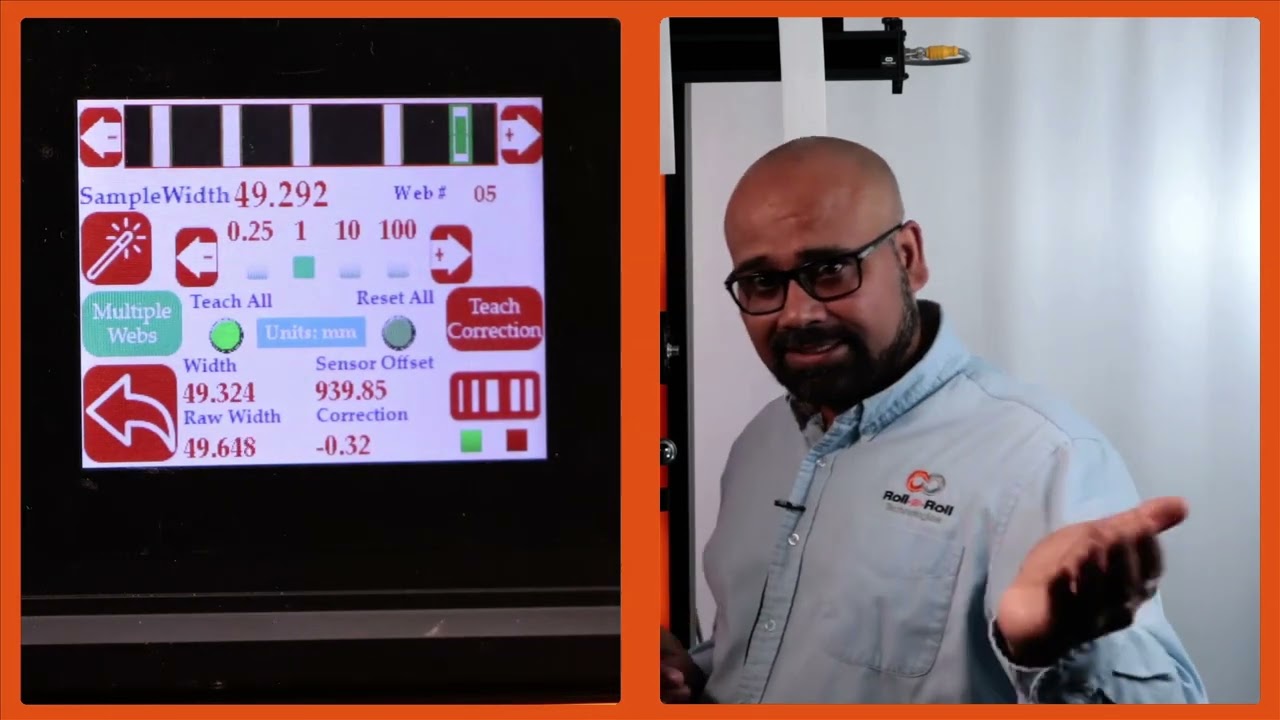
One other thing we need to do whenever we are initially setting up is um onetime calibration procedure that can be done on this screen. The idea for this is that we have the ability to calibrate our sensor for your conditions. We do have a calibration done in the factory, but when it's being installed, the sensor might be installed at a different distance than what we typically expect. And there are other things with the lighting and contrast that might change some of these parameters.
So, this calibration is necessary only if you're looking for a higher resolution measurement. For example, if you're looking for a tolerance of plus or - 1/16th of an inch, you don't need to do any of these calibration things. But any anytime you are below that. So anytime you're below a millimeter or below a 1/16th of an inch resolution, you would need to do a calibration.
This is done just for that particular setup. Once you do it, you don't have to do it for the rest of the run. It'll be stored and you take that calibration value. What does the calibration do?
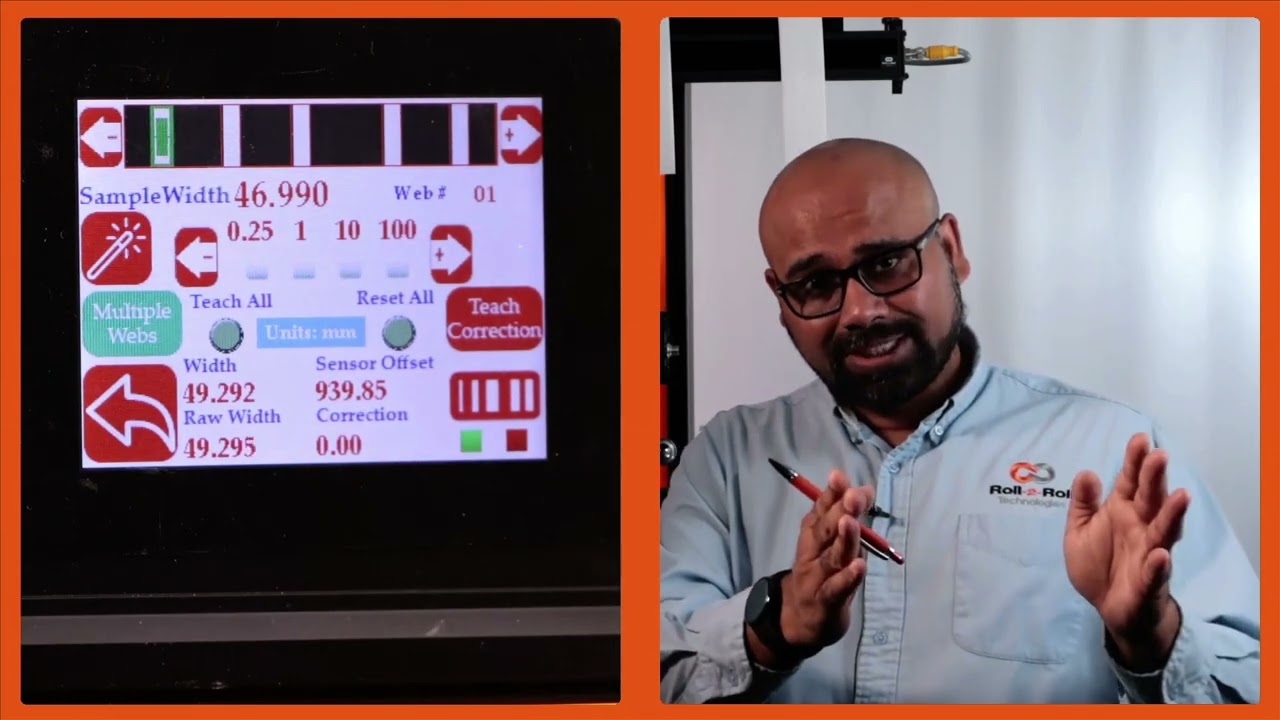
Essentially, I have a material or a sample of a known width and the sensor is providing a raw measurement. We're going to compare those two and then say the calibrated measurement is based on the actual sample width and whatever the raw offset is, that's the correction we are going to use for the rest of the measurements. So that's indicated here. So that's basically saying what is the correction from the actual width to the measured width.
That's essentially what the calibration is. So it's just creating a offset. So for example, let's say the sample width is 46. To change that, you press whatever you need to increment by and change that value.
I am going to put that as 49.244. Right now it's measuring 49.293. If I want to teach this, my sample width should match my measured width. To do that, press this teach icon and then press accept.
Now it has applied a correction. Essentially the raw width plus this correction gives me my actual width. And that's pretty simple. It's just a regular bias or correction that we are adding.
Nothing fancy about this calibration. So you can do that for all these other materials. We don't necessarily need to do this if your tolerance is 1/16th of an inch or 1.5 mm. We don't need to do that.
But for some customers looking for a higher resolution, you do that calibration procedure. Now, just to make it simple, you can enter all of these sample widths already and then you can do a one-time teaching. Let me show you how that works. I'm going to enter this sample width here.
Okay. So, if I want to do all of them together, I'm going to press this teach all button. Make sure that it's highlighted. And then I'm going to press this teach and accept.
Now, all these samples will have a correction. Before we had everything as zero. And if I now scroll through web five, web 4, web three, web two, and web 1, all of them now have a correction. So it's just a quick way for you to do this.
The general use case for this is that let's say you are a customer in automotive or medical and you have a QC process where you are only sampling a part of your product. You are setting up your slitter. You pull the initial sample after the operator has set up the slitter and you take that sample and you're doing a QC on that. Now, essentially what you're going to do is take that sample and enter it like what I have here.
Then you're going to do a teach all. Once that is done during any part of the run, we are taking that measurement online in line 100% of the time. So that's the biggest advantage with this system. In your typical process right now, you might be doing one sample at the beginning of the run.
At the end of the run, the operator needs to stop the machine, take that sample, give it to QC, take the measurement, and then everything is good. You run it, and then every time the machine is stopped, there is another sample that is taken. So, this is a random sampling process with a lot of time involved between one run to another. and we completely eliminate that and allow you to keep running the machine and monitor the width all the time.
So that's the biggest value proposition with our system. And that's essentially it. So that will allow you to calibrate each of these samples and be done with it.
Multiple width measurement is an application that many operations in converting would like to have. Much better if the application was capable of simultaneously measuring and monitoring the widths of several webs. Join Aravind Seshadri from Roll-2-Roll Technologies as he delves into the capabilities of the SCU6X controller and the ODC Family for web width measurement. Learn about the unique advantages of one-sided sensor technology, such as ease of installation in tight spaces and high resolution.
Transcript
Show full transcript (4086 words)
Hello everyone. This is Arvin Shadri from Rollto-roll Technologies. Today we're going to talk about web width measurement with our SCU6X controller. One of the key things with our SCU6X controller and the ODC sensors is that they not only are used for guiding purposes, they're also used for any type of cross machine direction width measurement applications.
It could be measuring the width of a single web or multiple webs. Here again to reiterate on some of the advantages of the ODC sensor is that it's a one-sided sensor technology. So it allows us to install the sensor in tight installation spaces whereas a camerabased traditional machine vision system might need a long longer field of view and working distance which creates issues if you want to add an width measurement system to an existing machine. The other advantage is that the light source, the optics and the camera, everything is built into a single interface like what we have here.
We don't have to have a separate light source or gantry to have the camera and the light source built in. The third advantage is that the sensor provides a one:one magnification. If the object is 100 mm wide, we're using a sensor that is at least 100 mm wide. So, we get a 1 one magnification.
The advantage is that when you go to a wider width, you don't lose any resolution. So for example, this ODC 960 which is a measuring range of 960 mm can provide the resolution of 127 micron on the camera level and then sub pixel with that you could get up to about 33 micron resolution. your resolution is not affected by the field of view that you are requiring. Because of these advantages, the ODC sensor is used for a lot of different applications, especially in existing sliver rewinders where you want to measure the width of the material.
Today, we're going to talk about something that is unique to our solution to measure multiple widths with the same system. The advantage of this is that because it's one-sided, we can have multiple webs ranging from one web all the way up to 32 webs per sensor. So that's what we're going to discuss a little bit. We're going to talk more about how this can be set up in the controller interface and then we'll also look at in another video how you can get the data out and what you can do with the system.
Okay, I've got this controller set up right now the home screen on this. The first and foremost thing that we're going to do with the SEO 6X is basically kind of pick the application. SEO6X is a pretty versatile controller. It can be used for a lot of different applications.
So in this case, I'm going to set it up for width measurement application. Could be a single web width or multiple web width. And once we do that, we can go into the sensor screen. Right now, I have just one sensor connected here, but we can connect multiple sensors.
In another video, we'll talk about how we can have multiple sensors either with a gap between them or an overlap between them so that we can stitch the image of two sensors into a single continuous image. In this video, we're just going to look at how to do this with a single sensor. So, I have this connected to sensor one and then you can see all the samples there. Any setting in this is going to be very similar to what we have done in the past with the SC6X controller in terms of setting the brightness, the contrast and all those things.
We would ask you to refer to the previous videos to learn more about that. In this case, we have a pretty good image already done. So, we'll just go into that operator width screen to take a look at the functionalities and what we can do there. To get to the operator width screen, from the home screen, we're going to press the tools icon, then the operator icon on the top right, and then the width icon.
This first page is the operator width home screen. The second page is an additional setup screen where you're able to do more setup related things. We'll cover both these screens in this video. So in the first screen you can see that it is providing you with a lot of different things.
First it's showing you the width of the web and then the web number. And if you want to go look at the width of the next web, press that icon. It'll go to web two and it's going to show you the width of the web there. And you can keep scrolling through basically how many webs you have.
You can go through these two icons on the top allow you to scroll through the webs. In this case, we are looking at multiple webs. For each web, we can set an upper limit, a lower limit, and a nominal width. The units are in millimeters.
If we change the units to inches, then everything will show up in inches. So, just to show you how this will work in inches. You can go back couple of one screen and then go to the display icon in the operator menu. And then the units, you can change it to inches.
And now the units on this screen will all be on inches. Then like I mentioned for each web, we can set an nominal width, upper limit, and lower limit. Right now I'm going to show you how we can set those things. So in order to set the nominal width, we're going to press that nominal width icon.
And then we're going to choose how much increment we want to make. So I'm going to do 10 mm increments here. So I'm going to change that to 50 mm. Okay.
So the nominal width is 49.24. That's it. There's no need to save anything here. Anytime you change that, that parameter is automatically saved and saved into the memory.
So when you power cycle it, it comes back in. Likewise, you can set the upper limit and the lower limit. So you choose the parameter that you want to change and pick the increment. If I do 1 mm increment that's going to be like that and you can do it like that.
It's very simple intuitive way to change it. And likewise you can change those things too. Now there are applications where we would have two types of outputs. One is to say that if my width is above a certain upper limit or if the width is below a certain lower limit you want to trigger an output there.
So in those cases we would have something what we call as that upper limit lower limit kind of thing. So this is a pretty simple setting. All that we are looking for is hey if the width goes above my upper limit trigger an output or if the width goes below the lower limit trigger another output. So just two boundaries and then within the nominal range the output is not triggered all good signals are provided.
If you want an additional layer where you want to set alarm limits and warning limits then we can do that too. So in this particular case then you need to make sure that it is in alarm and warning. When you have this in alarm and warning you have this button show up. Just to show you one one more time.
If I have it just on upper and lower limit these are the two parameters we can enter. But if we are in warning and alarm there are four parameters you can enter. The first two parameters are here and the second two parameters are warning limits. warning signal so that you don't have to stop the machine when the warning signal is there.
This is just for the operators to know something is getting to get bad and once it hits the alarm limits then you can stop the machine if you wanted to. Just like I mentioned the warning limits are going to be closer to your nominal width and the alarms are typically farther away from there. So in this case we have it set as plus or minus.5 mm and then this is plus or minus.1 mm for that and you can do that for every single web. You can set the upper limit, lower limit, alarm and warning limits.
Right now for web two it's not set up. Web three you can see what is set up there. None of these are set up there. But that's the way for us to set this up for the alarm and warning so that when the width changes you have the ability to provide a digital output to a stack light or something like that.
So that is essentially how to set the multiple width measurement these warnings and alarms. And again just to go through this one more time I'm going to pick width two. I'm going to set that nominal width to be 49 point let's say.5 there. So I am in warning and alarm.
So I'm setting the alarm limits for this. So I'm going to set this as 1 mm and the lower one as 1 mm as well. And alarm I'm going to set this as.5 and 0 five for that. And then you can keep doing that for multiple webs.
And if you go back here, you can see for the different values, different webs, you see different values there. When I go from one to another, you got all of these set there. All of these are saved in the memory. Then you have that option to do it.
This is where you use the controller. An operator is manually setting this. All of this can be automated through Ethernet and you can send a recipe to our controller to say web one should be this width. The upper limit is this and the lower limit is this.
Upper warning limit is this and lower warning limit is this and so on and so forth. So just to reiterate this is the procedure for somebody to set up a job. If you want to have all of these alarm warning limits you can set for individual webs and then set them up. to make it simple.
If you have a recipe or a job number, you can automate this by setting these through Ethernet if you wanted to. One other thing we need to do whenever we are initially setting up is u one-time calibration procedure that can be done on this screen. The idea for this is that we have the ability to calibrate our sensor for your conditions. We do have a calibration done in the factory, but when it's being installed, the sensor might be installed at a different distance than what we typically expect.
And then there are other things with the lighting and contrast that might change some of these parameters. So this calibration is necessary only if you're looking for a higher resolution measurement. For example, if you're looking for a tolerance of plus orus 1/16th of an inch, you don't need to do any of these calibration things. But any anytime you are below that.
So anytime you're below a millimeter or below a 1/16th of an inch resolution, you would need to do a calibration. This is done just for that particular setup. Once you do it, you don't have to do it for the rest of the run. It'll be stored and take that calibration value.
What does the calibration do? Essentially, I have a material or a sample of a known width and the sensor is providing a raw measurement. We're going to compare those two and then say the calibrated measurement is based on the actual sample width and whatever the raw offset is, that's the correction we're going to use for the rest of the measurements. So, that's indicated here.
So that's basically saying what is the correction from the actual width to the measured width. That's essentially what the calibration is. So it's just creating a offset. So for example, let's say the sample width is 46.
To change that, you press whatever you need to increment by and change that value. I am going to put that as 49.244. Right now it's measuring 49.293. If I want to teach this, my sample width should match my measured width.
To do that, press this teach icon and then press accept. Now it has applied a correction. Essentially the raw width plus this correction gives me my actual width. And that's pretty simple.
It's just a regular bias or correction that we are adding. Nothing fancy about this calibration. So you can do that for all these other materials. We don't necessarily need to do this if your tolerance is 1/16th of an inch or 1.5 mm.
We don't need to do that. But for some customers looking for a higher resolution, you do that calibration procedure. Now, just to make it simple, you can enter all of these sample widths already and then you can do a one-time teaching. Let me show you how that works.
I'm going to enter this sample width here. Okay. So, if I want to do all of them together, I'm going to press this teach all button. Make sure that it's highlighted.
And then I'm going to press this teach and accept. Now, all these samples will have a correction. Before we had everything as zero. And if I now scroll through web 5, web 4, web 3, web 2, and web 1, all of them now have a correction.
So it's just a quick way for you to do this. The general use case for this is that let's say you are a customer in automotive or medical and you have a QC process where you are only sampling a part of your product. You're setting up your slitter. You pull the initial sample after the operator has set up the slitter and you take that sample and you're doing a QC on that.
Now essentially what you're going to do is take that sample and enter it like what I have here. Then you're going to do a teach all. Once that is done during any part of the run, we are taking that measurement online in line 100% of the time. So that's the biggest advantage with this system.
In your typical process right now, you might be doing one sample at the beginning of the run. At the end of the run, the operator needs to stop the machine, take that sample, give it to QC, take the measurement, and then everything is good. You run it, and then every time the machine is stopped, there is another sample that is taken. So, this is a random sampling process with a lot of time involved between one run to another.
and we completely eliminate that and allow you to keep running the machine and monitor the width all the time. So that's the biggest value proposition with our system and that's essentially it. So that will allow you to calibrate each of these samples and be done with it. Now we do have another feature that allows you to get even higher insight into your process and what that is what we call pattern teaching.
So essentially what we will do with the pattern teaching is that we set the widths, we set the samples, we set the job, we're looking for not only the change in the width but also change in the movement of the material. You can enable that by pressing this button. That's in the pattern teaching mode. When you're ready to teach the pattern, we're going to press this teach pattern and press accept.
So now the system is taught the pattern. What is the advantage of that? If I have uh let's say I'm in web 3, right? And if the web 3 breaks right now, it is actually showing you that, hey, I'm supposed to see a web there.
It's broken. The value is zero and it's going to provide an alarm or alert right there. That's one advantage of that. Another advantage with that is that let's say I have a web five that I'm tracking right here.
And if I have another material that comes in between there, the web f measurement is not affected by that whatsoever. In a typical camerabased system, they're going to keep track of the width randomly based on which one is first and which one is second. That would affect the measurement. If I do have this pattern off, web 5 will actually jump.
You saw that it jumped to that 10 mm and it jumps back to avoid this jump. We are going to use the pattern and once the job is set up in your slitter rewinder, it's not going to change. The pattern is not going to change. Then even if something comes in that gets completely disregarded.
That's the advantage with the pattern teaching or pattern matching mode. Those are the key things with regard to how you can set up our SCS 6X controller for multiple slit width measurement. Okay, one other thing that we wanted to show is that this width measurement right now we're in pattern mode. So even in pattern mode, if the web moves back and forth, you can see that the web is moving, but it's also keeping track of that edge position, keeping track of that width pretty accurately.
And we can actually move this quite a ways off and that's when it will say that the pattern is supposed to be there, but it has moved from its intended position. So this is an example where let's say the slitter blade moves too much then you can catch that. Obviously it'll show up in the width but it'll also show up in the web position. As soon as we come back into that location the actual location itself then it locks in on that.
For customers that are looking for really high resolution measurement and high accuracy measurement. We also have other features to compensate for the installation of the sensor. In the previous section, I talked about the brightness, the contrast and all those kind of things. But on top of that, if you want to get a really high resolution measurement, then there are a few other things that we can compensate for.
One of the compensation is for how the sensor is aligned with respect to the machine. Obviously, we want the sensor face to be parallel to the surface of the web and we want the sensor to be at a certain distance from the web. But it can be installed at an angle and even small angles make a big difference in the measurement. So the example would be if I have a sample that is straight but if I put it at an angle then I'm looking at the essentially it's basically a cosine kind of thing.
So you are adding more to the width than that. So there is an issue with how the web is presenting. Ideally the camera it's it's just a line but you have two sensors in there. So there are two rows.
So we want the web to be perpendicular to the two rows that we have. Now it's impossible for somebody to install it exactly perpendicular. So we have that compensation available there. So I will show you how we can take care of that.
So when you first install the system and you want to compensate for the angle, the way to do that is that we can go into the power user screen and from there you would be able to set this up. So to get there, click on the tools icon bottom right power user and then go into the sensor. You can see that sensor one and it's identifying as ODC960. This is the number of pixels it has and all those kind of things.
There are actually 10 cameras in there. So for these high resolution measurement when you when we set this controller up on the back of that sensor, we will have a factory calibrated string of 10 numbers that you need to enter. So it will vary between five and 15. For each one of them, it'll be a number.
You can pick that number and whatever that number says you can set that number there by moving the upper and lower numbers. That's the first thing we need to do. The second thing we need to do is compensate for the angle. So that that is another thing that we have in documentation that you can look at and it will tell you what that number means.
There is a small measurement that you need to make when you do the first installation. And once you have that, that number you're going to come in and enter in that last column. These two things are necessary if you're looking for a measurement resolution of sub mm, actually sub 250 micro. Anytime you want that high of a resolution, we need to make sure we have these things set up.
This is a factory calibration number that you need to enter. The slope correction is another number you need to enter in this screen. When we do multiple click width measurement and we have a digital output that triggers an alarm limit or a warning limit, you can tie that to a stack light. If you have multiple web widths, multiple split widths, then if any one of them is out of the range, then those stack light would get triggered.
So we have one output for alarm, one for warning, and one for all good. And if any one of those lanes violate that condition, you will have that digital output get triggered. Just to show you how that works. Um, I don't have a stack light connected, but I do have a signal that would go out when that happens.
And you can see that information on the SCU6X controller. So that's what I'm going to show. In order to get to that screen, press the tools icon on the bottom right and then the arrow key on the bottom right and then digital IO. We want to make sure that the digital output is set for width.
And then you can see a real-time view of what the three outputs are. Right now I've got output three enabled because everything is as per the tolerances. So if I move or change the width of this material, you can see that it it triggers that alarm when that width changes. So if I have something that is narrower, you got that those are the alarm limits and walling warning limits that gets triggered.
So like I said it could be any any lane and that will provide the visual output for the operator to know there is a warning or an alarm doesn't tell you what lane it is. When we get this data through Ethernet then you would have information about exactly which lane has the problem and what kind of an alarm that we have in there. So we'll look at that in the next video. Just to summarize, in this video, we looked at how to set up a single sensor for multiple slit width measurement where you can set it up just directly on the SCU6X controller.
And we also saw how when you connect to a digital stack light, when the width of any of these lanes go above or below the limit, then you have the ability to trigger that stack light. In the next video, we'll look at how we can collect this data through the Ethernet and what are the functionalities that we have through Ethernet. And we'll also look at the app that we have and the app, the data that we can collect from the app and so on and so forth. So, please follow and subscribe to our channel and we'll see you in the next video.

How to Find the IP Address of Your SCU6x Controller
In this tutorial, we'll guide you through the steps to find the IP address, subnet, and gateway of your SCU 6X controller using the tool icon, power user, and communication settings. Discover the type of module you have - in this case, an ethernet IP module - and ensure you're connected to the correct network to connect to the app.
00:00 Introduction to Finding the IP Address
00:14 Understanding the IP Address Details
00:23 Module Type and Network Connection
Transcript
Show full transcript (80 words)
So, in order to find the IP address of the SC6X controller, we're going to go into the tools icon, bottom right, power user, and then communication. It's going to tell us what the IP address of the devices, the subnet, and the gateway. It's also showing us the type of module that we have. This is an Ethernet IP module. So we need to know that IP address and be inside that network to connect to the app.
For a complete overview of web width measurement with Roll-2-Roll® Sensors and Roll-2-Roll® Controller please visit this page: https://r2r.tech/articles/web-width-measurement-and-monitoring-applications-and-technology
For more information about the SCU controller please visit: https://r2r.tech/products/roll-2-roll-controller
Transcript
Show full transcript (1228 words)
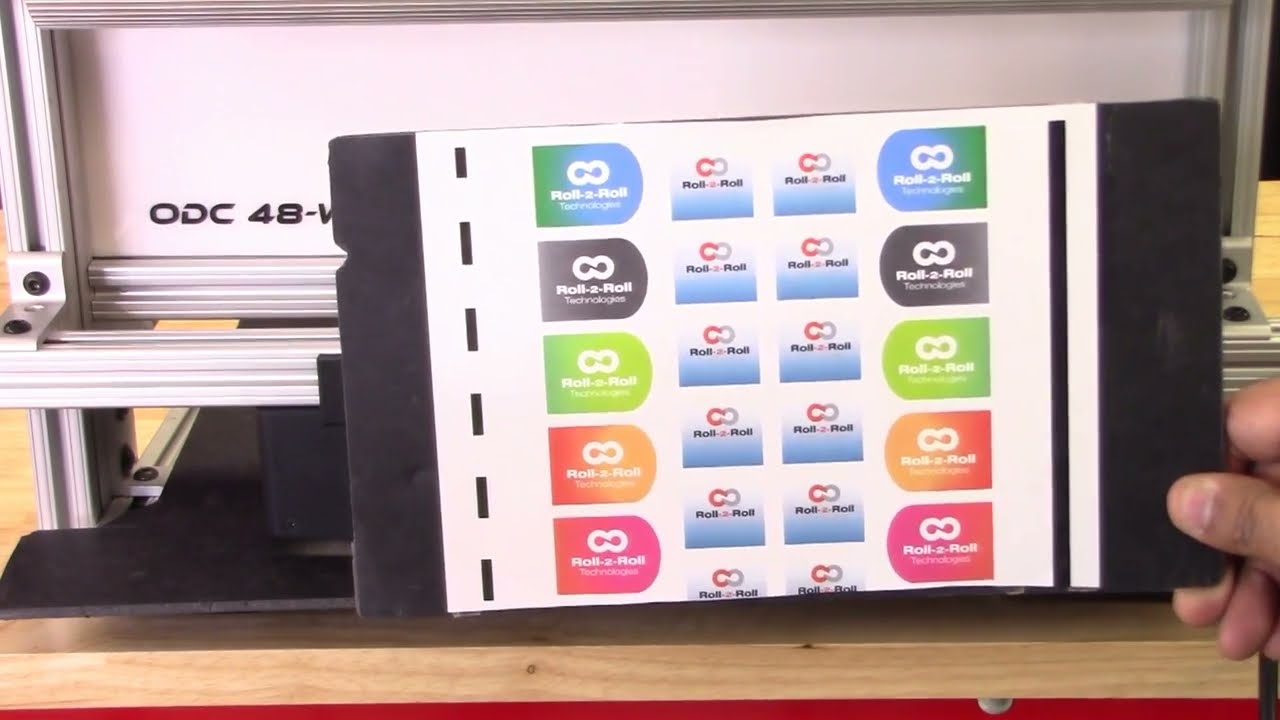
continuing along the lines of measuring the width of the web based on the contrasting feature in this video we're going to look at how we can measure the width based on some printing or contrasting feature on the web with two sensors so I've got a sample here with a whole bunch of features on the web not just the edge of the web the left side has a intermittent line of a certain width and then the right line right side has a solid line and then we have some labels with different edges with gradients and things like we can use any of these features to be able to measure the width of the web we don't necessarily need the edge of the web and as explained in the previous video These are relevant for certain applications where you want to measure the width of a coating or the width of a printed feature that might expand or contract differently than the edge of the web and then our sensors have the ability to be ability to do that so let's go into the controller and see how we can set this up we want to First make sure that both sensors are enabled and I've got both sensors enabled and I'm going to the operator sensor screen and we've got the sensor one and the Sensor 2 image as a first step what we are going to do is we're going to teach the teach Sensor 2 to look at that intermittent line and sensor one to look at the solid line and use that information to measure the width of the web so let's go to Sensor One sensor 1 has the solid line so we want to pick that line so I'm going to go in and pick the line mode and pick the feature that I want that's the solid feature that I want logged in on it now go into sensor 2. this is the intermittent line so if I move the web or remove the material you can see that the line disappears comes back in so I'm gonna pick that feature right there lock it in and then we have locked both the features but we don't know the distance between the two features so if we already know what the distance between the two features are then we can enter it so let's say it's eight inches is the distance between the two features I'm going to go in and teach it so the teaching procedure what it does is it teaches the controller to know that to know the distance would be in the two sensors if we don't do that then the output measurement is not it will be it will be proportional but it won't be the measurement so I'm going to go in and teach now I've got that measurement taught in as you can see on the web browser that the measurement now has updated to 8.002 inches and what I'm going to do is I'm going to move the sensor so maybe we can have a picture and you can see it there I'm going to move the sensor so that you can see how that width measurement changes oops there's the width measurement and when I move the sensor you can see that the width increased because I moved the sensor outside and now I'm going to move the sensor inside and you can see that the width goes down this way you can pretty much teach the controller to pick up any feature that you want and have the ability to track the width of the two features and teach the controller for the distance would be in the two sensors and then log the data we'll also look at how we can do the same thing with a different type of feature so we'll go into the controller operator sensor screen and then this is the intermittent line sensor so I'm gonna make sure to try to teach it to the edge of the label so I've got that label there put it on auto and I want to be able to teach that so we want to come in from this direction and pick that edge of the die-cut label there and I'm going to move this Sensor 2 and do the same thing sorry sensor 1 and do the same thing so this is the black line and this is the edge of the die cut label so we want to teach it to that want to go to that mode and pick that edge of the die cut label teach it to that teach it to that we need to make sure that this turns red and all the other features goes away that's when the controller says that the feed feature had been taught if it doesn't happen then the width will not have an output also what happens if we don't have it again if we go back and teach the distance between the two sensors so let's do that to be the same eight inches and if you go back into the web browser then you can see that's the width and if I move the sensor and you can see that on the top right hand corner if I move the sensor then the width increases or decreases so pretty much any feature that we could teach for in the contrast mode can be used to track the width of that contrasting or the combination of the contrasting feature one more thing I want to mention is that we want to make sure that the teaching is accepted by the controller if the teaching is not accepted then the width will not get recorded properly so for example if I go into the sensor screen go in here and then let's say the teaching was not accepted if the teaching was not accepted it's going to look like oops it's going to look like this even though it picked up the contrast the teaching is not accepted and if we go back to the home screen the width is going to be zero this is mainly because that in order to measure the with the contrast mode both sensors the contrast needs to be picked and thought so if we go back in and teach that contrasting feature for sensor one Sensor 2 also has that already and if you go back to the home screen you're going to see the width measurement and if you go back to the web browser you should also see that with the measurement there um that's essentially how we would set up the controller for web width measurement with two sensors and both sensors are in contrast mode and tracking a contrasting feature on either side of the web concludes our presentation about width measurement with either one sensor or two sensors with either Edge mode or contrast mode we also looked at the different outputs that we received from the controller with respect to analog digital and ethernet and with this you would be able to apply our products to a multiple different applications hope this information was useful and please subscribe to our Channel and for more information about our products and how they can be used in your application