
Unveiling the Advantages of the SCU6x Controller & ODC Sensors
In this episode of the Multiple Web Width Measurement Application Series, we explore the SCU6x Controller and ODC Sensors. These advanced technologies not only guide but also measure the width of single or multiple webs with precision. The ODC sensor stands out with its one-sided sensor technology, simplifying installations in tight spaces and offering a one-to-one magnification, ensuring high resolution even for wider measurements. Ideal for various applications, especially in existing slate rewinds, this comprehensive guide highlights the unique benefits of incorporating ODC sensors into your setup.
00:00 Introduction to SCU Six X Controller and ODC Sensors
00:25 Advantages of ODC Sensor Technology
01:31 Technical Specifications and Performance
01:55 Applications of ODC Sensors
Transcript
Show full transcript (296 words)
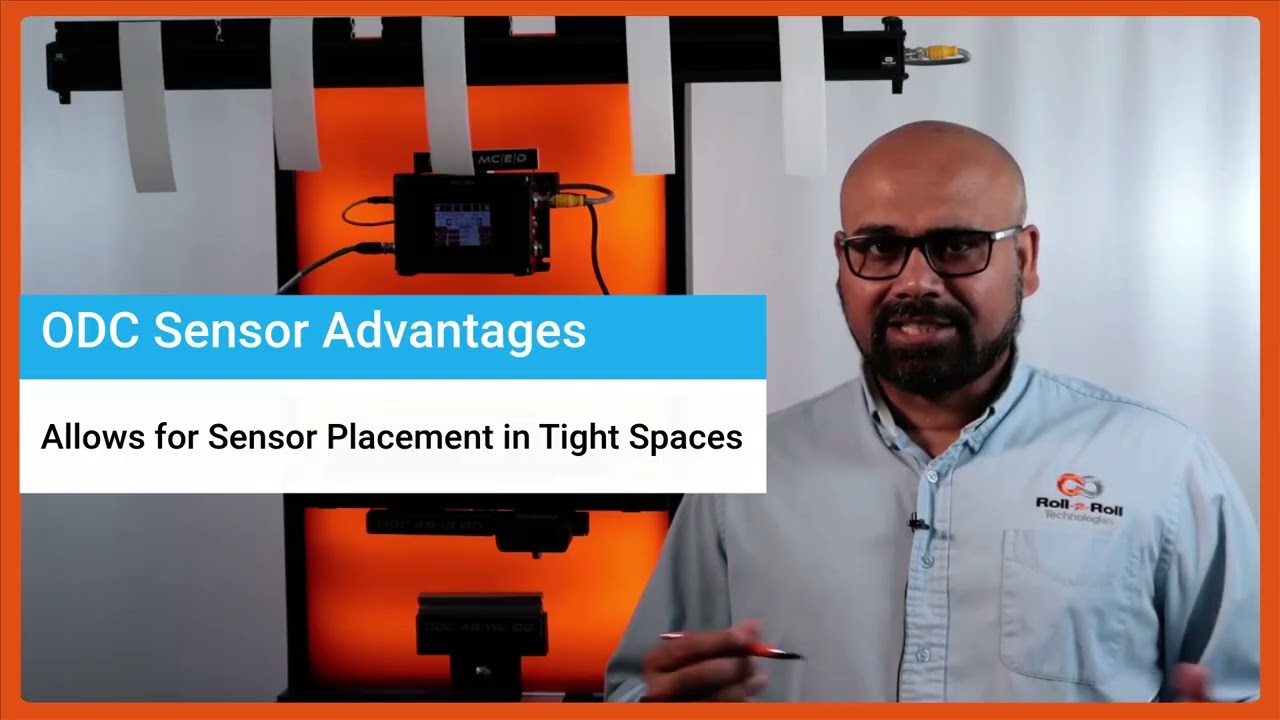
One of the key things with our SC6X controller and the ODC sensors is that [music] they not only are used for guiding purposes, they're also used for any type of cross machine direction width measurement applications. It could be measuring the width of a single web or multiple webs. Here again to reiterate on some of the advantages of the ODC sensor is that it's a one-sided sensor technology. So it allows us to install the sensor in tight installation spaces whereas a camerabased traditional machine v machine system might need a long longer field of view and working distance which creates issues if you want to add an width measurement system to an existing machine.
The other advantage is that the light source, the optics and the camera, everything is built into a single interface like what we have here. We don't have to have a separate light source or gantry [music] to have the camera and the light source built in. The third advantage is that the sensor provides a one one magnification. If the object is 100 mm wide, we're using a sensor that is at least 100 mm wide.
So, we get a one one magnification. The advantage is that when you go to a wider width, you don't lose any resolution. So for example, this ODC 960 which is a measuring range of 960 mm can provide the resolution of 127 micron on the camera level and then sub pixel with that you could get up to about 33 micron resolution. your resolution is not affected by the field of view that you are requiring.
Because of these advantages, the ODC sensor is used for a lot of different applications, especially in existing slitter rewinders where you want to measure the width of the material.